

THANK YOU FOR SUBSCRIBING

Pharma Tech Outlook Weekly Brief
Be first to read the latest tech news, Industry Leader's Insights, and CIO interviews of medium and large enterprises exclusively from Pharma Tech Outlook
A featured contribution from Leadership Perspectives: a curated forum reserved for leaders nominated by our subscribers and vetted by our Pharma Tech Outlook APAC Advisory Board.

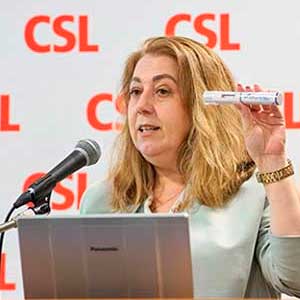
Rose Fida, Executive Director and Regional Lead of R&D for Japan & China at CSL, is an innovative leader with extensive experience in drug development, R&D governance, and strategic project management. With a steadfast commitment to advancing treatments for unmet medical needs, Rose drives impactful research programs across the Asia-Pacific region, driving innnovation to improve patient outcomes.
In an exclusive interview with Life Sciences Review APAC, Rose shares her perspective regarding the industry, sharing valuable insights into current developments, emerging challenges, and the future of therapeutic innovation.
1. Can you share your professional journey and the experiences that led you to your current role at CSL?
Growing up, I had a natural aptitude for mathematics and a passion for science and medicine. Despite winning a university-level maths competition at 15, a teacher advised me not to pursue science or maths, saying these weren’t “careers for girls.” That moment became defining—it fuelled my determination to prove that gender should never limit ambition. Fortunately, my parents encouraged me to pursue a biomedical career.
After my Honours degree, I earned a PhD in Physiology, focusing on serotonin in colonic motility. I then joined the Victorian College of Pharmacy as a Senior Scientist, working in pharmacokinetics—a field I initially knew little about. With supportive colleagues, I learned that success depends not on entering industry with a complete skill set, but on a willingness to learn. After 18 months, I became Pharmacokinetics Team Leader, sparking my enduring interest in drug development.
A personal turning point came when my father was diagnosed with cancer, which shifted my career to oncology drug development. At Mayne Pharma, I became Global Project Leader within 2.5 years, despite having no initial project management experience. Later, at Cytopia, I gained broad exposure to clinical, regulatory, and research domains. One of my proudest achievements was contributing to momelotinib, a treatment for myelofibrosis—later directly relevant to a family member.
When Cytopia was acquired, I joined CSL, where I have held roles from Early Development to R&D Governance. Today, I serve as Regional Lead for R&D in Japan and China, based in Tokyo. Relocating without prior cultural immersion required courage but has been deeply enriching.
This global role allows me to align regional execution with global priorities while embracing cross-cultural leadership. Above all, my purpose remains clear: to contribute to therapies that improve lives.
2. What differentiates your leadership style when navigating regulatory, cultural, and operational differences across APAC markets?
Leading R&D across APAC markets demands more than operational oversight—it requires cultural fluency, regulatory agility, and a deep respect for local nuance. My leadership style is anchored in authenticity and adaptability. I prioritise building high-performing, cross-functional teams that are empowered to navigate complexity while staying aligned with global objectives. I focus on fostering cohesion without compromising local agility.
“Ambiguity is the enemy of alignment. Clarity in purpose, roles, and expectations fosters alignment.”
Leading R&D across the APAC region requires more than technical expertise and operational oversight — it requires cultural intelligence, regulatory agility, and a deep respect for local nuances. My leadership style is grounded in authenticity, adaptability, strategic clarity, and collaborative execution. I prioritise building high-performing, cross-functional teams that are empowered to navigate complexity while staying aligned with global objectives. I’ve contributed to the integration of Japan R&D into CSL’s global R&D operating model and framework, while supporting China R&D’s expansion through tailored operational models.
I believe in empowering regional teams to innovate within strategic guardrails. This means fostering a leadership culture that values both precision and agility. I focus on fostering cohesion without compromising local agility. By aligning talent strategy with portfolio needs, we ensure that our teams are not only compliant but also resilient and future-ready.
3. Pharmacokinetics (PK) data plays a critical role in shaping clinical development programs. How do you see CRO partnerships influencing the quality, speed, and reliability of these insights?
Pharmacokinetics (PK) data is the compass that guides clinical development. It informs dose selection, safety margins, and therapeutic windows. In today’s accelerated landscape, CRO partnerships are instrumental in ensuring that PK insights are not only scientifically robust but also operationally scalable. At CSL, we engage CROs early in the development cycle which enhances data quality, compresses timelines, and mitigates risk. At CSL, we view CROs as strategic collaborators, not just service providers.
The best CROs act as strategic extensions of our internal teams. They bring specialised capabilities in bioanalytical method development, population PK modelling, and adaptive trial design. Their ability to manage complex logistics across geographies—while maintaining data fidelity—is critical to our success.
4. CROs often face variability in patient demographics, trial site capacity, and regulatory expectations. What practices have proven most effective for you in managing these complexities?
CROs often operate in environments marked by demographic diversity, site variability, and shifting regulatory expectations. To manage this, we emphasise proactive planning, scenario modelling, and continuous communication that combines standardised frameworks with local flexibility. These practices not only reduce variability but also build trust and transparency across the partnership.
One effective practice has been embedding regional site managers within our regional teams to manage the local CROs. This fosters accountability, accelerates decision-making, and ensures that trial execution remains aligned with strategic goals. It also builds trust—an intangible but vital asset in global R&D.
5. What strategies do you use to keep regional PK and CRO operations aligned with global R&D priorities while preserving agility in local execution?
Maintaining alignment between regional PK operations and global R&D priorities is a balancing act. I advocate a dual-track approach: embedding global strategy into regional execution while preserving the autonomy and agility needed for local responsiveness. This involves regular cross-regional governance forums, shared KPIs, transparent communication, and a culture of mutual accountability. It also means empowering regional teams to innovate within guardrails—ensuring that local insights inform global decisions.
6. What’s one piece of advice you’d offer to emerging R&D leaders managing multi-country pharmacokinetics programs?
For those stepping into multi-country PK leadership roles, my advice is simple: lead with clarity, curiosity and courage.
Ambiguity is the enemy of alignment. Clarity in purpose, roles, and expectations fosters alignment.
Innovation often comes from unexpected places. Curiosity drives innovation and empathy—two qualities essential for navigating diverse teams and complex ecosystems. Stay open to new ideas, technologies, and cultural perspectives.
Be courageous - make bold decisions grounded in data and empathy. The path to transformative therapies is rarely linear.
Invest in relationships, embrace ambiguity, and remember that every data point represents a patient. Let that guide your decisions, inspire your teams, and shape your legacy.
